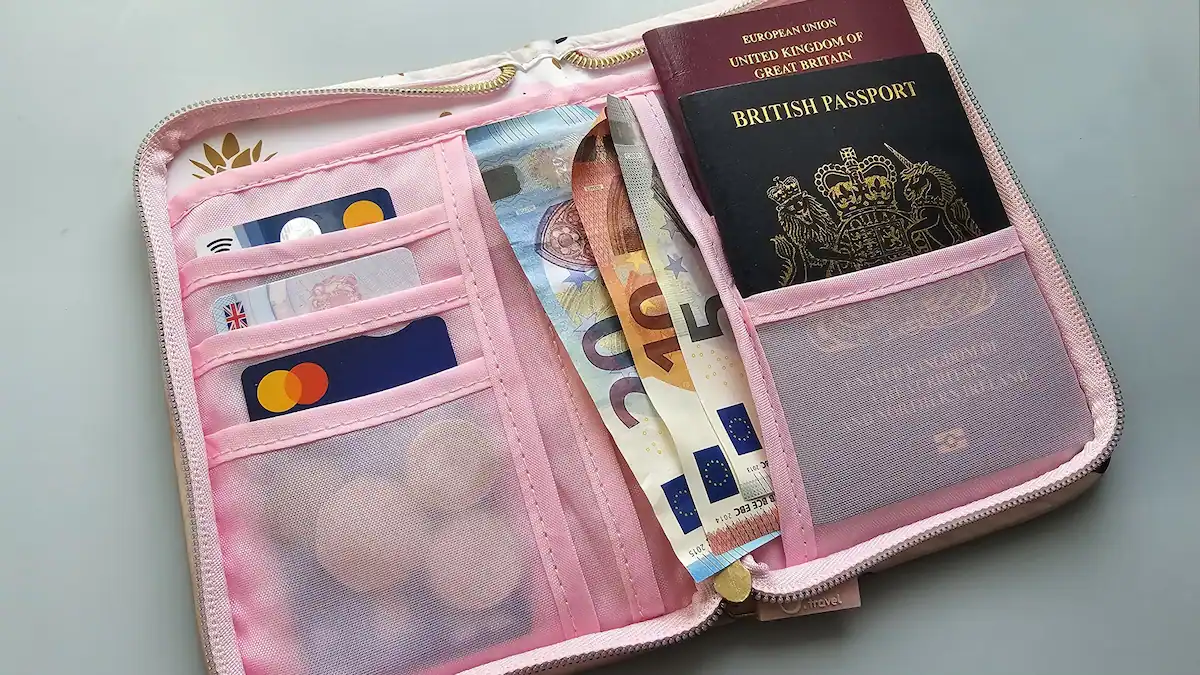
Travelling abroad requires a lot of documents and failing to obtain the correct ones can lead to major problems. Some are essential to allow you access into a foreign country, while others are needed for things such as healthcare or driving. Understanding which ones to take and how to obtain these documents can be tricky, especially if you are a novice traveller. So to make life easier we have complied a comprehensive list of essential documents needed to travel abroad.
1. Passport
You are not going anywhere without your passport. It is the most essential document needed to travel abroad. It is your identification and allows you access onto the plane and entrance into a foreign country.
How to apply for a UK passport
To apply for a UK passport, you can either go online or use a paper application form from the Post Office and apply by post. The current price for a standard adult UK passport is £94.50 if applying online (correct as of June 2025). The online application will walk you through the process of applying, what sections of the form to complete and the passport photo rules. These need to be followed strictly otherwise it can delay or invalidate your application. Alternatively, you can use the Post Office Check and Send service if you worried about doing it wrong. If you are abroad and your passport is about to expire, then you can use the overseas passport renewal service online. If you are a different nationality, your country will have a slightly different way to apply for their passport, so check with your own government about how to obtain one. Ensure you leave plenty of time when applying as passports can take several weeks to arrive.
Passport rules for travelling abroad
Every country you visit will have different passport rules, so ensure you double check these on the FCDO website prior to departing (learn more about why the FCDO is an important resource for backpackers in our blog post). It’s probably common knowledge that you cannot travel on an expired passport, but there are also some other passport rules which many people may not be aware of. Some other common passport rules include needing a certain number of months left on your passport, having at least 1 full blank page left, or your passport being no more than 10 years old. It is also worth noting that some countries can refuse entry if they see that you have a passport stamp in there from another particular country. For example, some Middle Eastern countries don’t allow access if you have certain other Middle Eastern stamps in your passport. This is due to strained diplomatic relationships between many of the countries. Again, it is essential to check prior to departing whether any of these rules apply to the country you are visiting.

2. Visas
A visa is a document which allows non-citizens entrance into a country for a certain length of time. The visa can be in paper form, electronic or a stamp in your passport. Sometimes no visa is required. Whether you need a visa or not depends on two things – your own nationality and the country you are travelling to. If you are unsure whether you need to apply for a visa you should check the FCDO website or the government website of the country you are travelling to.
What are the different types of visas?
There are different types of visas depending on the reason for visiting the country. Tourists just visiting for pleasure will generally just need a tourist visa. However, if you are going to be working, volunteering, studying or opening a business then you will need a different visa specific for that purpose. A common backpacking visa for those looking to work and travel is a ‘working holiday visa’. Many countries offer these visas including Australia, New Zealand, Canada, Japan and Argentina. They are generally open to young people up until the age of 30-35 and allow longer travel for up to 1-3 years. Some visas allow for just a single entry into the country but others permit multiple visits, allowing travel back and forth across the border. Double check the fine print of the visa to ensure you obtain the correct one for your trip.
How to apply for a visa
Visas can be applied for in several different ways, either online, in person at an embassy prior to departure, or at the border on arrival. Depending on your nationality and the country you are travelling to, will depend on how you will need to apply for the visa. If you are a UK citizen, then check out the FCDO website for specific visa and application information for the country you are travelling to. Other passport holders will need to consult their own government for visa and travel information or contact the embassy of the country they will be visiting. It is worth checking this information prior to booking your holiday to ensure that you will qualify for a visa and to check how long it will take to process. Note that if you have a criminal conviction or are a certain nationality it can stop you being able to obtain a visa to some countries.

When is a visa not required
There are often times when no visa is needed to enter a country. This is called a visa waiver or visa exemption. A visa exemption grants entrance without a visa to certain types of people or for certain reasons e.g. diplomats, armed forces. A visa waiver is when a country allows entrance for specific reasons e.g. tourism, for a short period of time. You may either be allowed to enter the country without any form of visa paperwork, or you may be required to complete a visa waiver form and pay a fee before being granted entrance into the country. For example, a UK citizen can enter any of the European Schengen counties visa free for 90 days. No forms or fees needed. Whereas the USA also offer a visa waiver programme for UK citizens, but their country requires that a visa waiver form called an ESTA is completed prior to arrival and that a fee is paid. Even if you don’t need a visa, there is only a certain length of time that a foreigner can stay in a country, so ensure you don’t overstay your visit.
What happens if I stay longer than my visa?
All visas and visa waivers are valid for a particular length of time. Generally, visa waivers and tourist visas are for short periods of time usually between 30-90 days but some can be as long as 180 days. Working holiday visas or other work or study visas can be valid for several years. A visa is activated once you set foot in the country. When you arrive, your passport should then be stamped with an arrival date and sometimes an exit date so that you can keep track of how long you are permitted in that country. Staying longer than this permitted time can result in serious penalties ranging from fines, to imprisonment to deportation, so ensure you don’t overstay your visa. If while travelling you want to extend you stay, you may be able to apply to their government for a visa extension, but ensure you leave plenty of time to do this so that there is no period where you are in the country without a valid visa.
3. Travel insurance
Insurance is something you should never travel without. Whether you need to claim for medical expenses, lost luggage or you have to cancel your holiday last minute, you need to have travel insurance. Travel insurance should be bought as close to when you book your holiday as possible, that way you are covered for any issues prior to departing, such as the airline going bankrupt. After booking insurance, it is a good idea to keep both an electronic copy and paper copy of your policy, including the policy number and emergency medical telephone number. This way you will have all the information to hand should the worst happen and you need to make a claim while abroad.
For more in-depth information on travel insurance and what to consider when buying it, check out The importance of travel insurance blog post.

4. Vaccination cards and medication
We have all lived through Covid and so remember the time when we had to be vaccinated to travel abroad. Thankfully those days are pretty much behind us and the Covid rules have relaxed in most countries. However, there are still countries which require vaccination records to be shown on arrival to prove you have been vaccinated against Covid or other diseases. For example, several African and South American countries require a yellow fever vaccination certificate to be shown on arrival to be allowed entrance into the country. These documents usually need to be the original ones, however it is a good idea to also take a copy of it as backup in case the original vaccination card gets lost. To find out more about travel vaccinations and entrance rules check out the Travel Health Pro, NHS Fit for Travel or the FCDO website.
For people travelling with medication, it is essential to ensure that you can enter the country legally with it. Many countries have restrictions on what medication can be brought into their country and how much. Even if medication is permitted, it may need to be accompanied by a prescription or letter from a doctor which you will need to obtain prior to departure. More information about travelling with medication can be found on the Travel Health Pro website.

5. Driving licence
If you are planning on driving abroad then you will need a valid driving licence. Most countries will allow you to drive abroad on your normal UK (or other nationality) licence for a short period. However, if you are going abroad for a prolonged period, then you may need either an International Driving Permit (IDP) or may be required to obtain a local licence, depending on the country. This can be as simple as filling in an online form to apply for one, or it could involve having to sit a whole driving test. If you know this might apply to you, then do some research prior to departing to check whether your normal driving licence will be sufficient. Driving on an incorrect licence could result in serious penalties.
6. Booking confirmations and vouchers
There are many things that may have to be prebooked when travelling abroad. From airport transfers, organised tours, accommodation and activities, the list is endless. All of these prebooked things will come with some kind of booking confirmation or voucher that might need to be presented when you arrive at your destination. Although most things are online these days, it is best to also take paper copies in case of battery failure or poor signal when you are away.
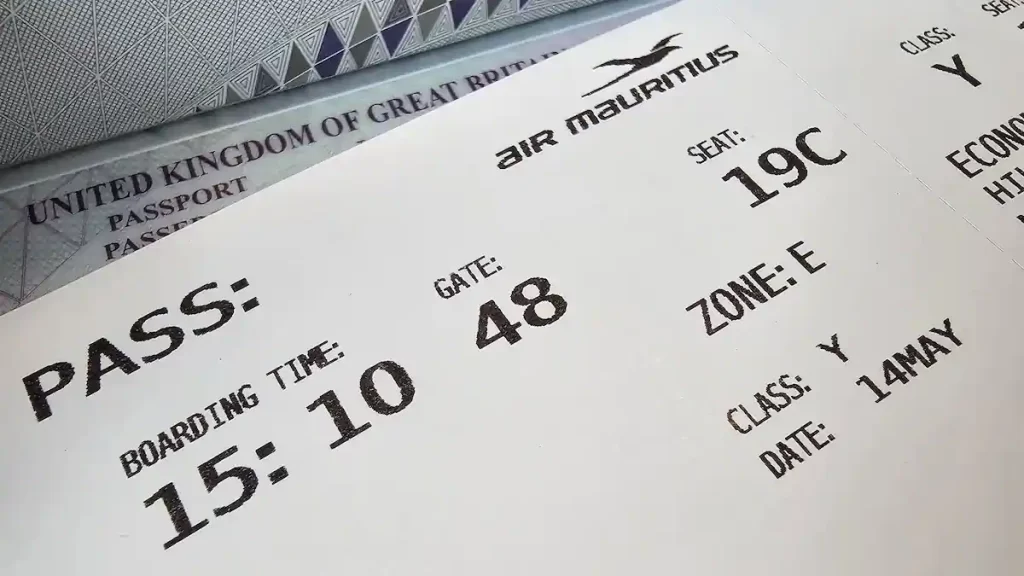
Now that you have all your documents sorted, it is essential to store them all in a secure place. I suggest getting yourself a good document wallet which can help organise all your documents and keep them safe. Amazon has a great range of cute and compact wallets.